
The Eurail Masterclass: European Train Travel, Routing & Reservations
Mastering high-speed corridors, mandatory reservation quirks, night trains, and multi-country routing — like an actual local.
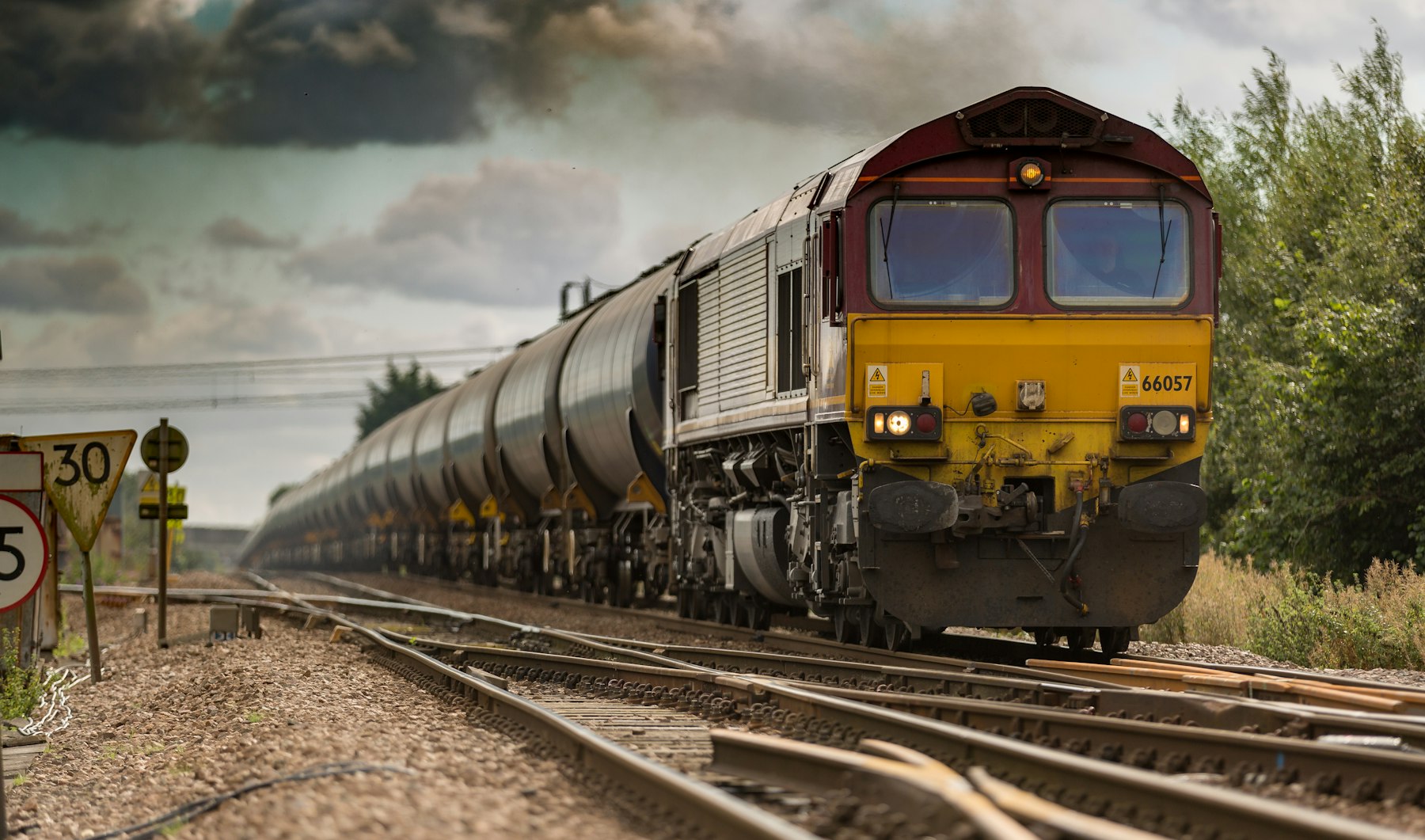



The dream is a familiar one: clutching a single golden ticket, you hop onto a sleek, silver train just as the doors hiss shut. You glide past the sun-drenched vineyards of southern France, through the snow-capped peaks of the Swiss Alps, and emerge into the bustling heart of Rome. No airport security, no baggage fees — just pure, unadulterated exploration.
This is the romance of the Eurail Pass. The reality, however, is significantly more complex.
If you treat a Eurail Pass as an all-access, zero-planning magic wand, you will likely end up frustrated, stranded on a platform, or paying exorbitant hidden fees. But if you learn to wield it like a local, it remains one of the most powerful travel assets in existence.
Welcome to the ultimate Eurail Masterclass — a field-tested, no-fluff breakdown of every system, trick, and tool you need to master European rail travel.
The Anatomy of the Eurail Pass
Before you map out a six-country itinerary, you must understand what you are actually buying. The Eurail Pass (for non-European residents) and the Interrail Pass (for European residents) are essentially the same product, offering access to 33 countries and over 30,000 destinations.
Global Pass vs. One Country Pass
🌍 The Global Pass
The heavyweight champion. It allows cross-border travel across the entire 33-country network. This is the choice for classic multi-country expeditions covering Western, Central, and Southern Europe.
- Cross-border travel in all partner countries
- Valid on most high-speed and regional trains
- Best for journeys of 5+ countries
🎯 The One Country Pass
Ideal for deep-dive explorations. If you’re spending three weeks purely exploring Italy’s regional lines or Spain’s AVE network, this offers far better return on investment.
- Valid only within the selected country
- Generally cheaper than the Global Pass
- Best for focused single-country travel
Continuous vs. Flexi Days
| Pass Type | How It Works | Best For | MyGuideMatch Verdict |
|---|---|---|---|
| Continuous | Travel every single day within a set period (15 days, 1 month, etc.) | Fast-paced travelers moving almost daily, covering maximum ground | Good value only if you move every day without rest |
| Flexi | A set number of travel days within a longer window (e.g., 7 days within 1 month) | Most travelers who need rest days between destinations | Almost always the smarter buy. Travel fatigue is real. |
The Break-Even Calculation
Never buy a pass blindly. A Eurail pass is essentially a bulk-buy discount on flexible tickets. Do the math first.
✅ When a Pass Wins
- Last-minute travel where point-to-point tickets are expensive
- Long-distance cross-border journeys
- Countries with high walk-up fares (Germany, Switzerland, Austria)
- Uncertain itineraries requiring flexibility
⚠️ When Point-to-Point Wins
- Your itinerary is 100% fixed months in advance
- High-speed routes with promo fares 90–120 days out (e.g., Paris→Amsterdam for €35)
- Travel in only 1–2 countries with limited routes
- You’re only making 3–4 long-distance journeys total
The Dark Art of Seat Reservations
This is where novice travelers get burned. A Eurail Pass is a ticket, not a seat. In many countries, possessing the pass simply gives you the right to board the train — but you must still purchase a mandatory seat reservation. This is the great divider of European train travel.
Zone 1: The “Hop-On” Countries (No Reservation Required)
In these countries, train travel is a beautifully frictionless experience. You check the timetable, walk onto the platform, find an empty seat, and show your pass to the conductor. No extra fee required.
✅ Reservation-Free Countries
- Germany (DB): The ICE (InterCity Express) network is incredibly fast and reservations are purely optional. You can cross the entire country without paying an extra cent beyond your pass.
- Switzerland (SBB): The undisputed king of rail travel. Aside from specialized panoramic tourist trains (the Glacier Express, Bernina Express), you can hop onto almost any train, anytime.
- Austria (ÖBB): Largely reservation-free for domestic routes. Excellent punctuality and beautiful scenery.
- Belgium (SNCB) and Netherlands (NS): Compact, efficient, and reservation-free — perfect for day-tripping between Bruges, Ghent, Brussels, and Amsterdam.
- Czechia (ČD): Affordable, scenic, and straightforward. Prague to Vienna or Krakow without reservation hassle.
Zone 2: The “Reservation Mandatory” Countries
Here, high-speed rail operators enforce strict quotas and mandatory fees. If you board without a valid reservation, you will be fined or ejected at the next station.
| Country / Operator | Reservation Fee | Key Warning |
|---|---|---|
| 🇫🇷 France (SNCF TGV) | €10–€20 | SNCF limits pass-holder seats per train. Once gone, you buy a full ticket even on a half-empty train. Book weeks in advance. |
| 🇮🇹 Italy (Trenitalia Frecciarossa) | €13 flat | Mandatory flat fee on all high-speed trains. Availability is generally better than France, but it cannot be skipped. |
| 🇪🇸 Spain (Renfe AVE) | ~€10 | Renfe’s online system frequently rejects foreign credit cards. You may need to book in person at a Spanish station. |
| 🇬🇧 Eurostar (London) | €30–€50+ | Limited pass-holder allocations. Book the moment your dates are confirmed — months in advance for summer travel. |
🧠 The MyGuideMatch Hack: Bypass the Reservation Fees
If you have a Flexi pass and want to avoid €20 fees, use the “No Reservations Required” filter in the Eurail app. You trade time for money — but on scenic routes, the slower regional train is often the better experience:
- Instead of the direct Paris→Lyon TGV (2 hours, €20 fee) → Take the regional TER trains (5 hours, €0 fee)
- Instead of the direct Rome→Florence Frecciarossa (1.5 hours, €13 fee) → Take the Regionale Veloce (3.5 hours, €0 fee)
Routing Like a Local: Multi-Country Strategy
The biggest mistake first-time European travelers make is treating the continent like a small state. An itinerary of London → Paris → Rome → Barcelona → Berlin looks clean on a map but involves 12+ hour travel days that devour your vacation. Intelligent routing relies on geographical clustering and leveraging the high-speed arteries.
Strategy 1: The High-Speed Corridors
The Benelux to Alps Artery
Amsterdam → Brussels → Paris → Strasbourg → Basel → Zurich. Fast, efficient, and heavily connected. The backbone of Western European rail.
The Central European Classic
Munich → Salzburg → Vienna → Prague → Berlin. Almost entirely reservation-free and highly reliable. A deeply rewarding cultural route.
The Mediterranean Curve
Barcelona → Marseille → Nice → Genoa → Cinque Terre → Rome. Spectacular coastal scenery, but requires managing heavy reservation fees throughout France and Italy.
Strategy 2: The Resurgence of the Night Train
To maximize your travel days and save on hotel costs, integrate overnight trains into your routing. The Austrian operator ÖBB has revolutionized overnight travel with their Nightjet network.
🌙 Nightjet: Key Routes and Costs
| Route | Couchette (Supplement) | Private Sleeper |
|---|---|---|
| Vienna → Paris | €30–€50 | €70–€120+ |
| Munich → Rome | €30–€50 | €70–€120+ |
| Zurich → Amsterdam | €30–€50 | €70–€120+ |
⚠️ Night trains are highly sought after. Book 2–3 months in advance for summer travel.
Strategy 3: Navigating Delays and Broken Connections
European trains are generally punctual, but delays happen. If a delayed first train causes you to miss a reserved connection, do not panic.
⚖️ Your EU Rail Passenger Rights
Under the European Directive on Rail Passengers’ Rights (CIV), if you hold a through-ticket or are traveling on a Pass, the operator of the delayed train is responsible for getting you to your final destination at no extra cost.
- Immediately find the conductor or station ticket office.
- Ask to have your ticket stamped and re-routed.
- If delayed over 60 minutes at arrival, you are entitled to compensation of 25–50% of your ticket price.
Need a Local Expert for Your Destination?
Once you’ve mastered the rail routes, find a vetted local guide who knows the destination inside out.
Find a Local Guide on MyGuideMatch →The Digital Arsenal: Apps You Actually Need
Do not rely solely on Google Maps. To travel like a local, you need the tools the locals use. Here are the four apps that make up the essential European rail toolkit.
DB Navigator (Deutsche Bahn)
The holy grail of European rail apps. Even if you’re nowhere near Germany, DB has the most robust, real-time timetable database for all of Europe. Shows platform numbers, live delays, and exact train compositions.
Eurail / Interrail Rail Planner
Essential for activating your travel days and showing your digital ticket to the conductor. Use the offline timetable feature to search routes without any signal in tunnels or rural areas.
ÖBB Scotty
The best app for anything east of Switzerland — covering Austria, Hungary, Czechia, Poland, and the Balkans. Excellent for Nightjet booking and Central European routing.
Trainline
If you run out of pass days and need a point-to-point ticket, Trainline bypasses clunky national operator websites and accepts all international cards without the foreign card rejection issues of Renfe.
Field-Tested Gear & Platform Etiquette
Train travel requires a different packing philosophy than air travel. You are your own porter — there is no checked luggage desk.
The Luggage Rule of Thumb
🎒 Can You Lift It Over Your Head Unassisted?
If not, it is too heavy. The luggage racks on standard European trains are situated directly above the seats. Leaving massive suitcases in the vestibules by the doors invites theft and blocks the aisles — which conductors actively despise.
- Ideal setup: A 40–45L travel backpack or a compact 4-wheel spinner under 23kg
- Avoid: Hard-shell suitcases over 25kg — they’re nearly impossible to manage on overnight trains and at busy platforms
- Pro tip: Station lockers at major hubs let you drop your bag during long layovers — explore the city unburdened
Security on Rails
Violent crime on European trains is incredibly rare. Petty theft, however, is an art form — particularly on routes through Paris Gare du Nord, Milano Centrale, and Rome Termini.
🎭 The “Helping Hand” Scam
Never let a stranger “help” you carry your bags onto the train. They will demand an aggressive tip or pickpocket you in the confusion during boarding. Politely but firmly decline all unsolicited assistance.
🔒 The Cable Lock Trick
Bring a small retractable cable lock. If you must leave your bag on the large luggage racks at the end of a car, lock the zippers together or secure it to the metal bar. It effectively deters snatch-and-grab thieves during brief station stops.
Cultural Etiquette
🤫 The Quiet Car
Indicated as Ruhebereich (German), Espace Pro (French), or Quiet Zone (English). If you book a seat here, absolute silence is expected — no phone calls, no loud conversations, no speakerphone. Locals will not hesitate to firmly (and publicly) scold you.
🧀 Food and Drink: Embrace It
Unlike local metros, it is entirely acceptable — and deeply encouraged — to bring a full feast onto long-distance trains. Grabbing fresh bread, local cheese, fruit, and a bottle of regional wine from a market before boarding a 4-hour train is peak European travel culture. You will receive envious looks from other passengers, not disapproval.
The Complete Do’s and Don’ts of European Train Travel
✅ Always DO This
- Activate your travel day carefully. Only toggle the travel day switch on the morning of your departure. Activating it days early loses the day entirely if plans change.
- Check the platform composition boards. The Wagenstandsanzeiger shows exactly which sector on the platform your car number will arrive at. No more sprinting with luggage.
- Utilize station lockers. Major European stations have secure lockers. Dump your bags and explore the city unburdened during long layovers.
- Book cross-border high-speed trains early. Trains like the Eurostar (London→Paris) or TGV Lyria (Paris→Switzerland) sell out of pass-holder seats weeks — sometimes months — in advance.
- Download offline timetables before you travel. Apps like DB Navigator allow you to save real-time data. Essential when passing through tunnels or rural areas with no signal.
🚫 Never DON’T This
- Don’t assume 1st Class is necessary. 2nd Class on European high-speed rail equals Premium Economy on a plane — ample legroom, power outlets, tray tables. Rarely worth the premium.
- Don’t forget to write your journey in the travel diary. On paper passes: you must write the date, origin, and destination in ink before boarding. Blank = fare evasion.
- Don’t rely on station Wi-Fi. It drops in tunnels and rural stretches constantly. Pre-download Spotify playlists, Netflix episodes, and offline maps before departure.
- Don’t board Italian regional trains without validating (paper tickets). If you have a physical point-to-point ticket in Italy, stamp it in the green/white machines on the platform. Mobile Eurail passes are exempt.
- Don’t ignore reservation quotas in France. SNCF caps the number of pass-holder seats per train. A half-empty TGV can legally have zero available pass-holder seats.
Frequently Asked Questions
Can I buy a mandatory seat reservation at the station right before departure? +
How do I handle border crossings between Schengen and non-Schengen countries? +
Is the Eurail app reliable for checking departure times? +
What happens if there is a rail strike? +
Can I use the Eurail Pass on buses or city metro systems? +
Is a 1st Class Eurail pass worth the extra cost? +
How far in advance should I book Nightjet sleeper trains? +
The Freedom of the Rails
Mastering the European rail network requires a shift in mindset. It asks you to abandon the rigid point-to-point anxiety of air travel and embrace a more fluid, landscape-driven rhythm. Yes, the reservation systems in France will test your patience, and the sheer scale of the German network can feel intimidating at first.
But when you are settled into a window seat, watching the sunset cast long shadows over the Tuscan countryside, sipping a local wine you bought at the station market — the logistical hurdles fade away. You aren’t just moving between destinations; the journey itself has become the destination.
Travel smarter. Plan meticulously. Then, once you step onto the platform, let the rails take over.
Find Your Local Guide for Each Destination →