
Iceland in Seven Days: Waterfalls, Volcanoes, and a Reality Check on Paila Tours’ Route
One of Iceland’s great attractions is how quickly the landscape can change your attention. A city morning gives way to open country. A waterfall appears beyond a road bend. A dark coastline makes yesterday’s photographs look as if they came from another holiday.
Paila Tours’ seven-day Iceland package builds its appeal around that variety. It includes Reykjavík, the Golden Circle, the South Coast, Snæfellsnes, the Blue Lagoon, and Reykjanes. That is a substantial collection of experiences without attempting a full circuit of the island.
Our assessment is that the route has a strong foundation for a first visit, particularly for travelers who prefer guided day excursions to planning their own driving. The important qualifications are repeated road travel, incomplete information about inclusions, and a need to treat weather and volcanic-area access as active planning issues.
Editorial note: This is a review of the advertised itinerary and official destination guidance, not a firsthand report. Information was checked on 31 August 2026. Safety conditions and access restrictions can change quickly; current local instructions always take priority.
⚡ The advertised package at a glance
| Duration | Seven days; the exact number of included nights is not specified |
|---|---|
| Starting price | CHF 1,500; request a detailed quote |
| Listed group size | Eight people; confirm for your departure |
| Route structure | Reykjavík arrival, regional excursions, departure from Keflavík |
| Main highlights | Golden Circle, South Coast, Snæfellsnes, Blue Lagoon, Reykjanes |
No clear itemized inclusions list or guide language is published. Confirm hotel nights, transport, guiding, admissions, meals, and flights separately.
What this itinerary does well
Its strongest feature is the range of landscapes within a regional route. The Golden Circle introduces geothermal and waterfall scenery. The South Coast adds dark beaches and large waterfalls. Snæfellsnes brings another coastline and a different mountain profile. The Blue Lagoon creates a pause between excursion days.
Several days explicitly return to Reykjavík. If the operator confirms a single accommodation base, that can reduce repacking and make evenings easier to organize. You can leave larger luggage behind and settle into a familiar routine.
The cost of that convenience is time on the road. A day trip to a distant region includes the journey back as well as the outward drive. Ask for approximate vehicle hours, especially if anyone gets motion sick or finds long seated periods uncomfortable.
This is also not a Ring Road tour. Do not expect the eastern fjords, northern Iceland, or every famous glacier lagoon to appear merely because the holiday lasts a week.
Day 1: Reykjavík is an introduction, not a checklist
The opening day names Hallgrímskirkja, Harpa, and the Old Harbour. Together they suggest a manageable introduction to the capital, depending on your arrival time.
Before making independent plans, confirm which airport your transfer serves. The departure section names Keflavík International Airport. Your arrival flight details, hotel location, and transfer arrangements should line up explicitly.
Give yourself permission to keep the first day simple. A short city walk and a meal may be more enjoyable than trying to complete every landmark after an overnight journey. Check which visits are exterior stops and whether any paid entry is included.
Day 2: The Golden Circle connects history and geology
The route includes Þingvellir, Gullfoss, the Geysir area, and Kerið. The official Iceland tourism guide identifies Þingvellir, Geysir, and Gullfoss as the core Golden Circle sights.
Þingvellir deserves attention beyond the familiar tectonic-plate explanation. UNESCO recognizes the site’s association with Iceland’s historic outdoor assembly, which began around 930. Its landscape and political history belong to the same visit.
At Gullfoss, let the changing viewpoints shape the experience. You do not need to stand in the wettest position to appreciate the waterfall. Follow the open visitor paths and protect your camera or phone from spray.
In the Geysir geothermal area, the itinerary highlights Strokkur. Waiting and observing are part of the attraction. Remain behind barriers and do not approach hot water or unstable ground for a closer photograph.
Kerið adds another landscape type to the day. Ask whether entrance is included and what walking route is planned. With four stops, a focused visit at each is more realistic than a long hike everywhere.
Day 3: The South Coast is spectacular—and requires restraint
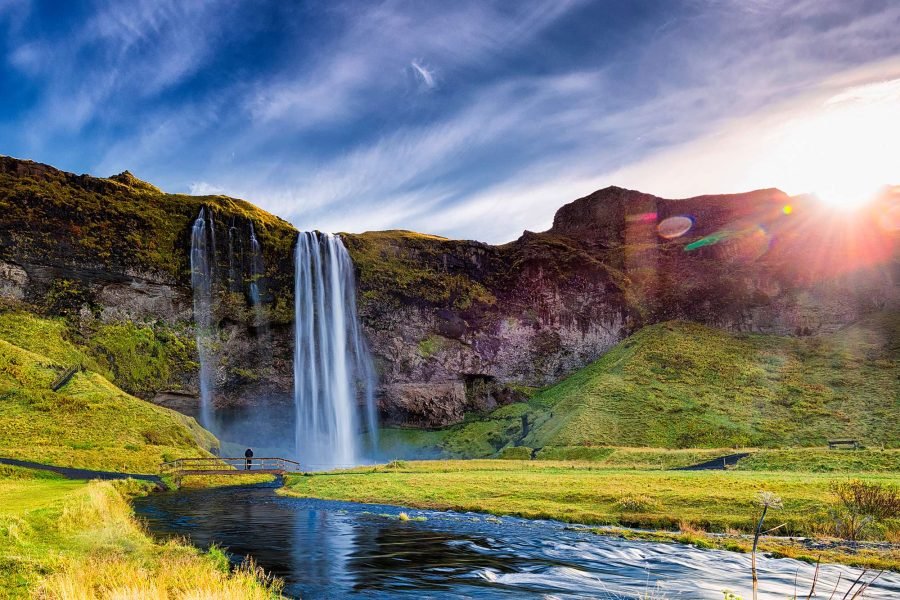
The advertised route names Seljalandsfoss, Skógafoss, and Reynisfjara. These are strong choices for a first South Coast excursion because they show different relationships between water, cliffs, and the coast.
The two waterfalls should not be treated as interchangeable. The well-known walk behind a waterfall refers to Seljalandsfoss, when the path is open and conditions permit. Do not interpret the package’s broad wording as an invitation to walk behind Skógafoss.
A waterproof outer layer is more useful here than trying to shelter under an umbrella in wind. Consider whether you want a close, potentially wet viewpoint or a more comfortable position farther back. Both can be rewarding.
Reynisfjara requires a different mindset altogether. This is a sightseeing stop, not a swimming beach or a place to test how close you can stand to the sea.
At the research check, SafeTravel’s Black Beach Safety page warned of hazardous conditions and viewpoint-only access. That is not a prediction for your date. It is a reminder to check live guidance and obey on-site closures. Powerful waves can reach farther inland than expected, and cliffs also present rockfall hazards.
Stay in permitted areas, supervise children closely, and keep your attention on the sea. A guide changing or limiting the stop for safety is making an essential adjustment, not taking away the “real” experience.
Day 4: Snæfellsnes adds a different coastal story
Kirkjufell, Arnarstapi, and Djúpalónssandur form the advertised outline. The peninsula is a useful addition because it gives the trip more variety than repeating the same southern route.
Kirkjufell’s recognizable profile makes it an obvious photographic stop. Approach it as a landscape to view from designated areas, not a mountain you should automatically climb because it appears in the itinerary.
At Arnarstapi, the coastline invites slower observation. Look for the relationship between rock, water, and the edge of the land. Keep a sensible distance from cliffs and use the paths that are open on the day.
Djúpalónssandur adds another exposed beach environment. Again, the sensible priority is the permitted viewing experience, not reaching the waterline.
Ask how much time is planned at each stop and how long the return to Reykjavík usually takes. This day may look concise as three place names, while still being demanding once travel is included. A comfortable vehicle, planned breaks, and realistic expectations matter.
Day 5: The Blue Lagoon works best as a deliberate pause
Placing a relaxation day after several outings is a strong itinerary choice. It gives travelers a reason to slow down rather than feel they should be adding another long excursion.
The Blue Lagoon is not simply an untouched natural pool. Its own account of the lagoon’s origins explains its connection to geothermal energy production. That context makes the setting more interesting, not less appealing.
Confirm whether admission is included and, if so, which ticket category and time slot. The package description mentions treatments, masks, and drinks, but descriptive language does not establish that every item is covered. Separate spa services may require their own reservation and payment.
Ask about current access, transfer arrangements, and the plan if operations change. Review Blue Lagoon’s official visitor information and current safety guidance before traveling.
Avoid treating the visit as a medical treatment with guaranteed benefits. Its practical role in this itinerary is a warm-water leisure experience and a break from the road.
Day 6: Reykjanes needs a flexible version of the plan
The listing names Krýsuvík, the Bridge Between Continents, Gunnuhver, and Grindavík. This is the part of the route that most clearly requires current confirmation.
Reykjanes has experienced volcanic unrest, and a general tour description cannot guarantee access to every road or stop on a future date. The responsible question is: what is the operator’s plan if part of the route is restricted?
Consult SafeTravel’s Reykjanes guidance and the main SafeTravel conditions website near departure. Some explanatory pages carry older dated status notes, so read them alongside live alerts and local instructions rather than treating every paragraph as a current all-clear.
Stay on marked routes. Do not walk onto lava to inspect whether it has cooled, and do not approach geothermal features beyond barriers. A landscape can look quiet while still presenting hazards.
If Grindavík or another stop cannot be visited, the replacement should be agreed by the operator according to actual conditions. This article does not substitute a different destination and present it as part of the purchased package.
Day 7: Allow proper time for Keflavík departure
The last day is for the airport transfer. Confirm the pickup time, baggage arrangements, and the airline’s recommended arrival margin.
If your flight leaves late, ask whether luggage storage or a modest additional city activity is possible. Do not assume unused hours translate into an included extra tour.
After several full excursion days, a straightforward final morning may be the most comfortable ending.
How to assess the CHF 1,500 starting price
The missing inclusions list is the biggest obstacle to a value judgment. The price could represent a very different proposition depending on hotel nights, room occupancy, transport, guiding, and admissions.
Request an itemized proposal showing the exact accommodation, the number of nights, breakfasts or other meals, airport transfers, Blue Lagoon admission, and any additional site charges. Confirm whether flights are excluded and whether a solo supplement applies.
For comparison, consider an independent holiday with similar accommodation and the same regional reach. If you would otherwise book multiple guided excursions, a coordinated package may be attractive. If you mainly want Reykjavík and one day trip, this route may include more travel than you need.
Ask what happens financially when weather or access restrictions change an activity. A substitution policy, cancellation rule, and refund condition are different things; each should be clear before payment.
Choose your season for the trip you actually want
Long summer evenings and a winter aurora-focused holiday are different experiences. Visit Iceland notes the extended light of the midnight-sun period, which can change how evenings feel.
This package does not list a dedicated northern-lights excursion. Do not book it assuming aurora viewing is included, and never treat a sighting as guaranteed. If that is your main goal, discuss season, scheduling, and a specific excursion separately.
Check your travel dates against daylight, weather, and the operator’s seasonal itinerary. A week-long route should adapt to conditions rather than simply repeat the same promises throughout the year.
Our verdict: varied and appealing, with essential questions to settle
The seven-day Iceland route offers a strong selection of regional highlights and a welcome pause at the Blue Lagoon. Its repeated Reykjavík returns may suit travelers who value a stable base and prefer not to drive.
Its limitations are the long excursion days, unclear inclusions, and the need for a flexible Reykjanes plan. Resolve those details and judge the route against your tolerance for vehicle time.