
Three Countries, Six Days: Reviewing Paila Tours’ Best of the Alps
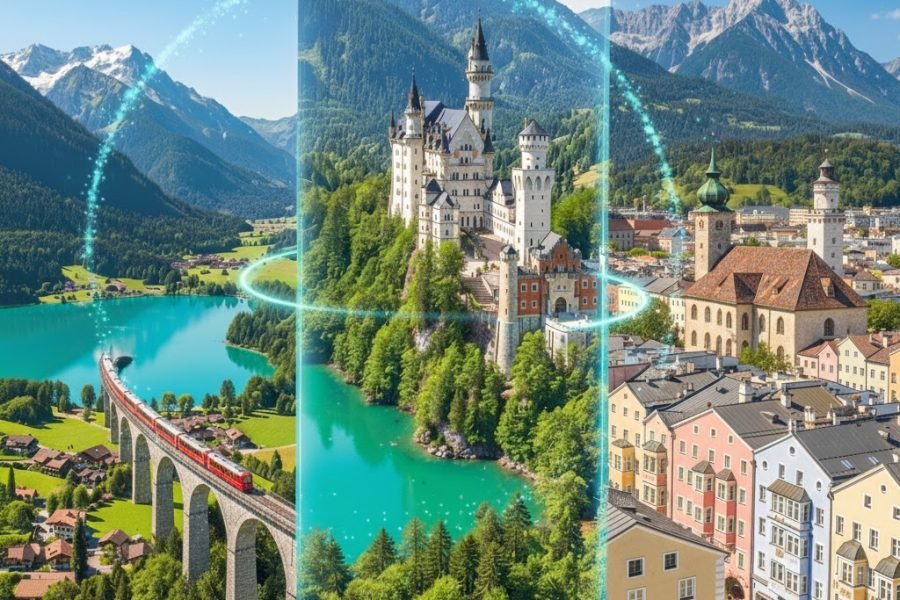
A mountain valley in Switzerland, a castle rising above Bavaria, and an Austrian city framed by peaks: this is the kind of European trip that can fill a camera roll without repeating the same scene.
Paila Tours’ Best of the Alps package promises that variety in six days. Its route combines Switzerland’s landscapes with Neuschwanstein Castle and Innsbruck, giving travelers a taste of three countries without requiring a long holiday.
On itinerary design alone, the idea is attractive. The additional German and Austrian days bring architectural and cultural variety to a strongly scenic Swiss beginning. However, the published page contains logistical inconsistencies that should be clarified before booking. This is a promising route to investigate, not a package whose fine print should be accepted without questions.
Editorial note: This is a research-based review of the advertised itinerary, not a firsthand account or customer rating. Information was checked on 31 August 2026; the confirmed booking proposal should govern your trip.
⚡ What the package advertises
| Duration | Six days, five nights |
|---|---|
| Starting price | CHF 1,000, subject to your booking quote |
| Countries in the route | Switzerland, Germany, Austria |
| Signature stops | Bernese Oberland, eastern Switzerland, Neuschwanstein, Füssen, Innsbruck, Wattens, Rhine Falls, Zurich |
| Listed services | Accommodation, airport transfers, guide support, photos and videos |
| Main extras | Meals, drinks, and optional attraction tickets |
The description mentions a Nepali guide, while the language field is blank. The group-size field says one person, which does not reliably establish the actual departure format. Request confirmation of both.
The booking details that need clarification
Although this is a Switzerland–Germany–Austria itinerary, the inclusions mention transportation in Switzerland, Italy, and France. The exclusions refer to a Venice-to-France flight, and the final day mentions a Paris airport transfer despite a Swiss sightseeing finish.
These details conflict with the route. They may be editing errors, but that explanation is an inference, not confirmation from the operator. Do not build your flights around either interpretation.
Ask for a corrected, dated proposal identifying arrival and departure airports, each overnight location, cross-border transport, and all included transfers. You should also receive clear payment and cancellation terms. Resolving these points does not diminish the destination appeal; it establishes which holiday you are actually buying.
Day 1: Arrival in Switzerland and a practical reset
The itinerary begins with airport pickup, check-in, and a free evening. Use it to settle in and confirm the next morning’s arrangements.
For a trip covering three countries, luggage choices matter from the start. A bag you can manage comfortably is more useful than carrying outfits for every possible photo setting. Ask whether there are luggage limits in the vehicle and whether you change accommodation during the tour.
If cooking is important to your group, confirm a usable kitchen rather than interpreting a reference to a relaxed evening as a facility guarantee. Hotels and apartments offer different arrangements, and the exact property can shape how easy meals feel after a long day.
This is also the moment to discuss activity priorities. If one traveler wants every mountain ride while another wants cafés and gentle walks, identify those preferences before the group reaches a ticket counter.
Day 2: The classic Swiss valley-and-mountain day
Interlaken, Lauterbrunnen, and Grindelwald occupy the second day, with a published schedule extending from 7:30 a.m. to 8 p.m. Expect an active introduction rather than leisurely exploration of every town.
Interlaken sets the scene. Lauterbrunnen adds the vertical drama of a valley waterfall. Grindelwald supplies the mountain excursion decision: First Cliff Walk or the railway to Kleine Scheidegg.
The most useful preparation is to understand that choice. First is attractive if the viewing walk and gondola experience are priorities. Kleine Scheidegg may appeal more if you want the railway journey and time looking at the mountain landscape. Neither option means a Jungfraujoch ticket is automatically included.
Check Jungfrau Railways’ excursion information and ask the operator how visibility, operating conditions, and queues influence the day. A famous viewpoint is less rewarding if you spend the visit worrying about the group’s departure time.
Take the published length of the day seriously. Families should plan snacks, water, and a realistic amount of walking. Anyone expecting long afternoon breaks may find this the most demanding part of the journey.
Day 3: Walensee, Flumserberg, and Appenzell
The eastern Swiss section gives the trip variety before the border crossing. A lake stop, a mountain attraction, and time in Appenzell create a different sequence from the previous day’s well-known resort towns.
At Walensee, a short stop can be enough to appreciate the scale of the landscape if you resist trying to do too much. Ask whether the visit is a viewpoint pause or includes a longer walk. The difference matters if you are picturing a relaxed lakeside afternoon.
Flumserberg adds the advertised toboggan ride. The resort identifies FLOOMZER as a summer attraction, so the proposed activity should match the season. Confirm the required ticket and what nonparticipants can do during the stop.
Appenzell is a chance to slow your attention, even if the route itself stays busy. Look at façades, browse if time permits, and enjoy being in a town rather than moving directly from one ride to another.
A regional name should not be interpreted as a promise to visit every nearby landmark. Ask specifically before assuming that a particular lake, hiking trail, or mountain restaurant seen in promotional photographs is part of the route.
Day 4: Neuschwanstein and Füssen’s Lech Falls
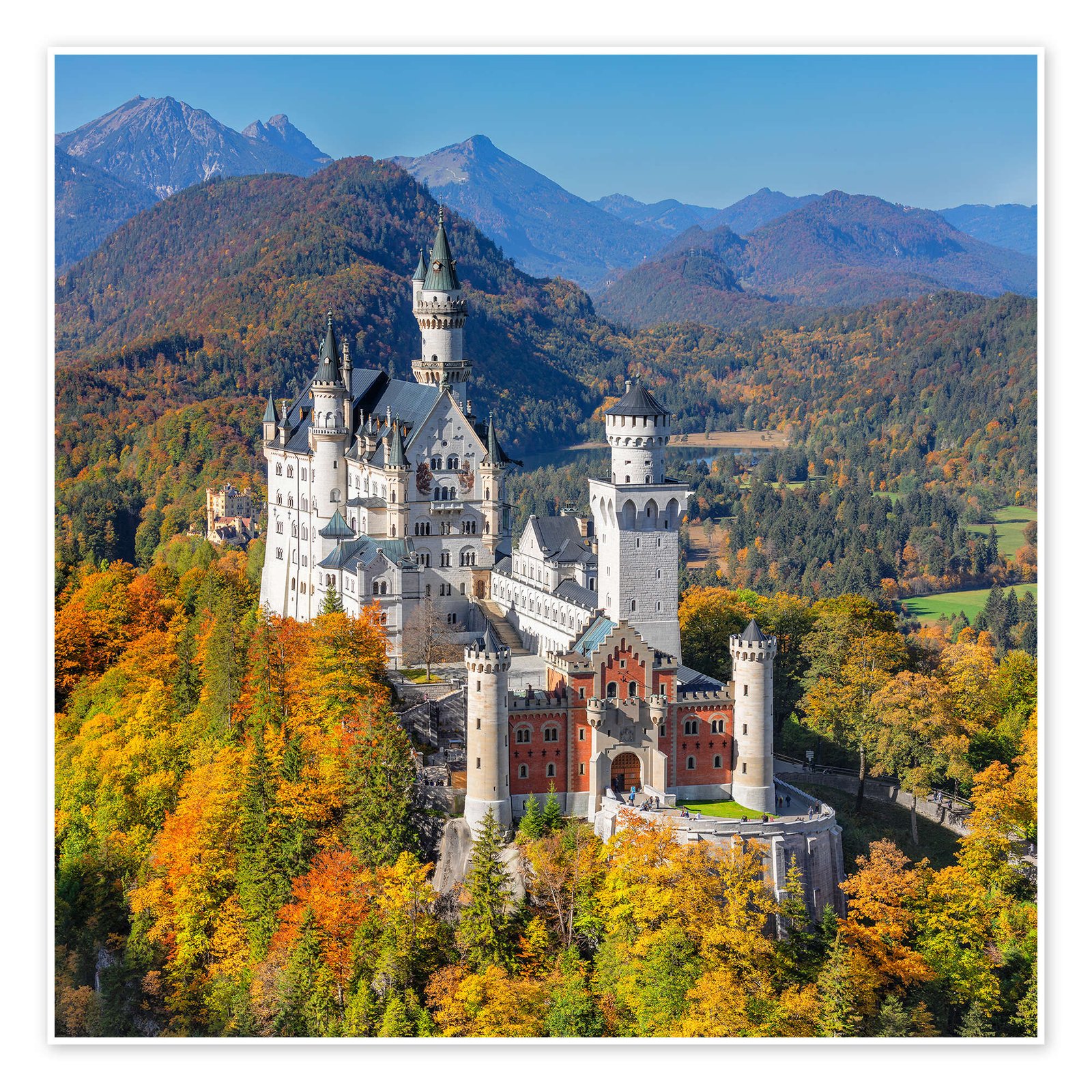
This is the day that most clearly distinguishes the package from a Switzerland-only tour. Neuschwanstein changes the visual language from Alpine villages to a deliberately theatrical royal building.
Its appeal is partly the setting. Even travelers with little interest in palace interiors can appreciate the castle’s relationship with the wooded slopes and surrounding landscape. However, exterior viewpoints and an interior tour are separate expectations.
The Bavarian Palace Administration states that visiting inside Neuschwanstein requires a guided tour. Ask whether the package arranges those tickets, whether they cost extra, and whether your group has a confirmed time slot. A stop at the castle does not, by itself, guarantee admission.
Allow for the approach as well. Official visitor information describes a steep walk of about 30–40 minutes from the ticket centre to the castle. Transport options do not necessarily remove all walking. Review the official access information if mobility or stamina is a concern.
Marienbrücke is named in the itinerary as a viewpoint. Access should be checked for your date, especially when conditions could affect paths or the bridge. Do not make one exact photograph the measure of the day’s success.
The additional Lech Falls stop near Füssen gives the day a natural counterpoint. After timed admission and castle crowds, a focused riverside visit may be more satisfying than adding another major attraction.
Day 5: Innsbruck and Swarovski Crystal Worlds
Innsbruck is a useful choice for this route because its city attractions still feel connected to the surrounding mountains. You can move from a historic street to a view of the peaks without treating nature and culture as separate holidays.
The Golden Roof is the obvious focal point. Innsbruck’s tourism office identifies its 2,657 gilded copper shingles and dates the landmark to around 1500. That detail gives you something specific to look for beyond simply recognizing the name. See the official Golden Roof guide.
The itinerary also names Maria-Theresien-Straße, so ask how the walk connects that street with the old town and where you will have free time. The city section should leave room for noticing smaller details: an arcade, a shop window, or how a mountain view appears at the end of a street. A city visit becomes more memorable when it is not reduced to one quick photograph and a shopping deadline.
Swarovski Kristallwelten adds a very different attraction. Located in Wattens, around 20 kilometres from Innsbruck, it combines artistic installations, visitor spaces, and gardens. The official Crystal Worlds website is the right place to check the current experience and visitor arrangements.
Treat this as a separate excursion, with travel and admission time. It is not simply a shop next to the Golden Roof. Ask how the day divides between Innsbruck and Wattens, particularly if your group is more interested in the city than the installations.
For families and mixed-interest groups, that contrast can work well. For someone seeking a mountain hike, it is a reminder that this package is a scenic and cultural sampler, not six days of outdoor adventure.
Day 6: Rhine Falls, Zurich, and the confirmed departure plan
The sightseeing route returns to Switzerland for Rhine Falls and Zurich. As a sequence, it makes sense: one final natural highlight followed by a city farewell.
The departure logistics need explicit confirmation because of the contradictory Paris reference on the listing. Ask which airport receives the included transfer and at what time. Do not assume a Zurich flight is covered simply because Zurich is the final city mentioned.
Rhine Falls is best approached according to the time and activity actually available. If a boat is proposed, confirm its separate charge and whether operating conditions can change the plan.
In Zurich, a focused walk is more realistic than an open-ended city tour if a flight follows. Choose the flight around the agreed transfer schedule, or discuss an extra night if you want a less hurried finish.
Does visiting three countries make this better value?
Country count is not a useful measure on its own. The real benefit is the difference between experiences: Swiss valleys, a Bavarian castle, and an Austrian city with a separate art attraction.
The six-day format gives the Swiss opening more context than a four-day break, but it also introduces more transport. Overnight locations will determine whether the cross-border section feels balanced or tiring. Ask for those locations before judging the pace.
When comparing prices, request a total that includes your room arrangement and selected admissions. List meals, drinks, mountain tickets, castle admission, and Crystal Worlds separately unless the operator expressly includes them. Add your travel to and from the confirmed airports.
The guide’s role is also part of the value. Practical coordination, language support, and help with timing may be worth paying for. Those benefits should be assessed alongside the accommodation and transport, rather than expecting the package to be cheaper than every possible independent alternative.
Who should shortlist this itinerary?
This route suits first-time visitors who want recognizable sights across several settings and are comfortable with full days. It may work particularly well for a family group with varied interests, provided everyone understands the walking and vehicle time.
It is less suitable for travelers who dislike changing locations, want long hikes, or prefer spontaneous afternoons. A six-day escorted itinerary needs shared timings, and flexibility has practical limits.
If you are traveling with older relatives, ask about the castle approach, restroom opportunities, luggage handling, and places to sit while others take part in optional activities. These details often matter more to daily comfort than the number of advertised highlights.
Frequently asked questions
- Is Neuschwanstein admission included? The listing does not clearly establish that. An interior visit requires a guided tour; request a confirmed ticket arrangement and price.
- Is a Nepali guide guaranteed? The description mentions one, but the departure-specific guide and language should be confirmed in writing.
- Does the tour visit Italy or France? The day-by-day route does not. References to those countries elsewhere on the page conflict with the itinerary and require correction.
- Is the trip suitable in every season? Ask for a seasonal version. Mountain operations, daylight, paths, and the summer toboggan attraction can change what is practical.
Our verdict: strong variety, provided the logistics are corrected
The Best of the Alps route has an appealing identity. It keeps the mountains in view while adding enough history, architecture, and city time to avoid six similar sightseeing days.
Its weakness is the clarity of the published booking information. A corrected proposal with realistic transfers, overnight locations, and admission arrangements would make the package much easier to assess.
If this blend fits your travel style, ask Paila Tours for the confirmed six-day Alps itinerary. Make the final decision on that document, your complete budget, and the pace you genuinely want from a holiday.