
Alps to Venice to Paris: Is Paila Tours’ 10-Day Europe Tour Worth It?
The most tempting thing about a first European holiday is also its biggest planning problem: everything feels close enough to include. A Swiss valley, Milan’s cathedral, a Venetian canal, and the Eiffel Tower can all end up on the same wish list.
Turning that list into a holiday is the difficult part.
Paila Tours’ ten-day Europe package attempts exactly that. It connects Switzerland, Italy, and France, moving from landscapes to cities and finishing in Paris. The appeal is obvious, but the success of the trip depends on something less glamorous than the photographs: how well the transfers and ticketed visits fit together.
Our view is that this is a compelling introductory route for travelers who want variety and organized support. It is also a busy holiday. You should book it because you enjoy moving between places, not because ten days sounds like plenty of time for three countries.
Editorial note: This review assesses the published itinerary and official visitor information. It is not a firsthand travel account. Details were checked on 31 August 2026; prices, admission arrangements, and schedules require departure-specific confirmation.
⚡ What the tour includes on paper
| Duration | Ten days, nine nights |
|---|---|
| Starting price | CHF 2,000, subject to a complete booking quote |
| Route | Switzerland, Milan, Venice and lagoon islands, Paris |
| Accommodation | Airbnb or hotel, with specific properties to be confirmed |
| Included | Accommodation, airport transfers, transportation within the three countries, guide support, photos and videos |
| Excluded | Venice-to-France flight, visa processing, optional activity tickets, food and drinks |
The Paila Tours Europe Tour page is the source for these details. It does not clearly settle every admission or transport arrangement. Guide language mentions Nepali, but confirm your departure.
The route’s strongest idea: let the holiday change character
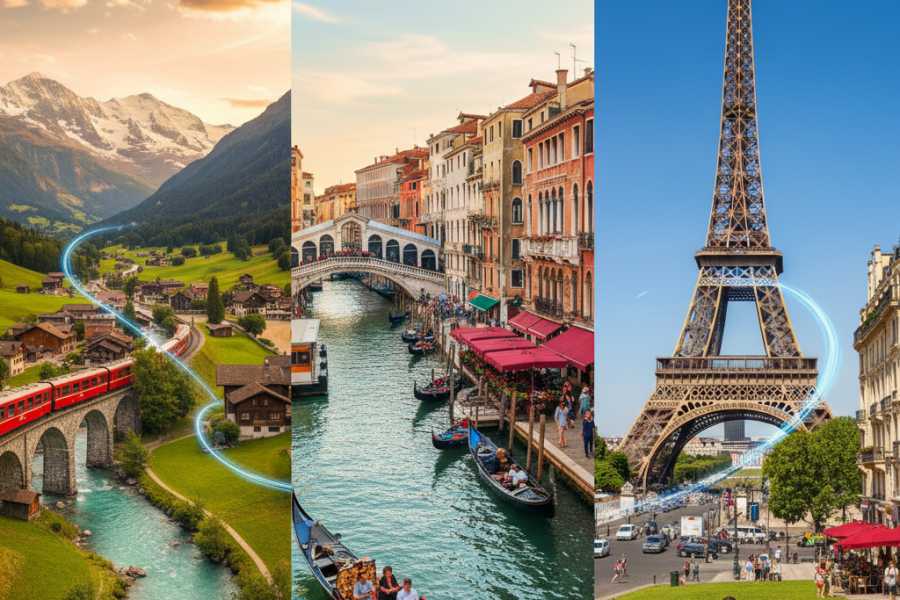
The itinerary works because the countries do different jobs. Switzerland gives you landscapes and mountain excursions. Milan introduces monumental architecture and an urban pace. Venice shifts the journey onto water and narrow pedestrian streets. Paris finishes with a concentrated day of familiar landmarks.
That progression is more engaging than collecting cities that offer similar experiences. It also provides useful variety for a group whose members want different things from a holiday.
The tradeoff is depth. You will sample each place, and several days include substantial travel. Think of this as a well-supported introduction that may inspire a future return, rather than an attempt to finish Switzerland, Italy, and France in one visit.
Day 1: Arrive in Switzerland and prepare for the route
The first day is for airport pickup, check-in, and a free evening. Confirm the pickup airport and meeting procedure before purchasing your flight.
Use the evening to organize a small day bag and separate items you will need during sightseeing from the luggage that travels between accommodations. Keep booking documents and transport information available offline.
Ask where you are staying and whether cooking facilities or breakfast are available. The accommodation category matters because meals are excluded, and the first evening is easier when everyone knows the food plan.
Day 2: Interlaken, Lauterbrunnen, and Grindelwald
This is the Swiss postcard day, but it is also a long one: the published window runs from 7:30 a.m. to 8 p.m. Interlaken, Lauterbrunnen, and Grindelwald each provide a different view of the region.
The key decision is the proposed mountain option. Paila lists First Cliff Walk or a train journey to Kleine Scheidegg. Choose according to the experience you want, the forecast, and the separate ticket cost. Do not add Jungfraujoch to your expectations simply because you will be in the Jungfrau region.
A useful strategy is to identify one priority for each stop. In Lauterbrunnen, that might be time to appreciate Staubbach Falls. At Grindelwald, it might be the mountain excursion itself. That is more realistic than arriving with a long list of independent activities.
Day 3: Eastern Switzerland offers a different view
Walensee, Flumserberg, and Appenzell make the Swiss section more varied. The day moves between lake scenery, a mountain activity, and a town visit.
The toboggan element needs seasonal confirmation. Flumserberg’s FLOOMZER information identifies it as a summer attraction. Ask what replaces it if your travel date or operating conditions make it unavailable.
Appenzell is worth treating as a place to observe, not only a backdrop. Even a brief walk becomes more rewarding when you notice details and give yourself permission to stop taking pictures for a few minutes.
Day 4: Rhine Falls and Zurich, then onward to Milan
This is the first day when sightseeing and relocation share the schedule. The Swiss stops sound straightforward individually; adding an evening transfer means timing matters.
Confirm how you travel to Milan, which station or arrival point is used, and whether luggage remains with the group throughout. The listing suggests rail travel, but the final booking should identify the service rather than leave you to infer it from an icon.
Keep the Zurich visit focused. If you try to turn it into a full city exploration, the onward journey may feel like an interruption rather than the next chapter. A manageable walking route and an unhurried meal are often more useful than squeezing in one extra landmark.
Ask about the likely Milan check-in time. It will affect how much energy you have for the following day.
Day 5: Milan deserves more than a cathedral photograph
The Duomo is the natural centrepiece, and the rooftop experience adds a perspective you cannot get from the square. The cathedral’s official terraces guide explains that access choices include stairs or a lift, with further stairs on the terraces. A lift ticket should not be interpreted as removing every step.
Ask which areas your ticket covers and whether rooftop access is included in the package or purchased separately. If anyone has mobility limitations, check the specific route before booking.
Galleria Vittorio Emanuele II adds a different kind of architecture. It works well as a place to look upward, notice the scale of the interior, and enjoy the transition between city spaces without turning the visit into a shopping obligation.
Sforza Castle and Parco Sempione provide a useful change of pace. A park break can make the day feel like a holiday rather than a sequence of queues.
The Last Supper is listed as optional. The museum’s official information states that booking is mandatory. If seeing it is essential to your trip, discuss tickets early; do not count on arranging it casually during the city visit.
Day 6: Travel to Venice and learn to move at its pace
Venice rewards a different approach from Milan. Luggage, bridges, pedestrian routes, and water transport become part of the day. Pack so you can manage your own bag comfortably unless handling assistance is explicitly included.
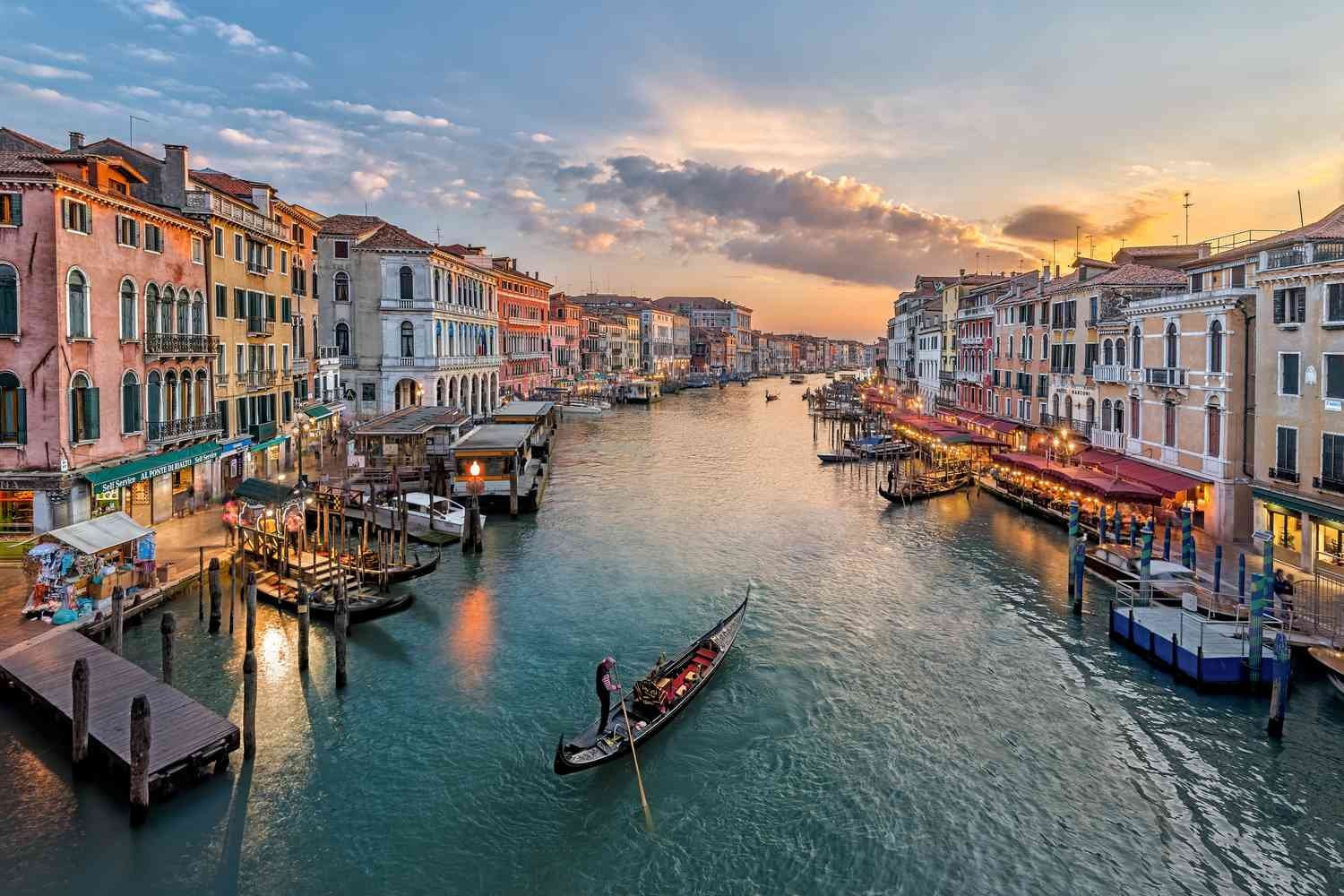
The itinerary lists a morning transfer, a Grand Canal ride, St. Mark’s area, Rialto Bridge, and an optional gondola. Confirm the actual transport service and door-to-door timing rather than relying on an approximate journey duration.
A Grand Canal ride can be a highlight because it lets you experience how the city is organized around water. Ask whether the proposed ride uses public transport, a shared excursion boat, or a private service; the experience and cost differ.
Likewise, visiting St. Mark’s Square does not establish that basilica admission is arranged. Confirm ticketed interiors separately.
A gondola is an optional choice, not a requirement for enjoying Venice. If it matters to you, agree on the arrangement and price first. If it does not, use the time for a short walk and a quieter view of the canals.
Day 7: Murano, Burano, and Torcello
The island day is one of the itinerary’s most appealing additions. It gives Venice more space than a single rushed city stop and introduces a different atmosphere beyond the main sightseeing area.
Murano is associated with glassmaking, and the itinerary proposes a demonstration. Ask whether that is a confirmed visit and how much of the stop is devoted to the demonstration versus a shop. There is no need to buy something simply because a shopping opportunity forms part of the route.
Burano’s colorful houses make photography tempting, but ordinary neighborhood etiquette still applies. Keep doorways clear, avoid entering private areas, and remember that people live behind the façades.
Torcello brings a quieter final stop. With three islands in one day, boat connections and time ashore need careful management. Ask whether the tour uses scheduled public boats or an organized service and how weather may affect the order.
The best island day leaves enough time to register the differences between places. If the schedule becomes tight, fewer hurried activities are often preferable to spending every stop watching the clock.
Day 8: Venice to Paris is a travel day
The Venice-to-France flight is explicitly excluded from the starting package price. Clarify who books it, which airports are used, the baggage allowance, and whether the group is expected to travel on the same service.
An approximately two-hour flight is not a two-hour transfer day. Reaching the airport, checking in, collecting luggage, and traveling to the Paris accommodation all take additional time.
The proposed evening stroll should remain flexible. If the journey runs smoothly, it is a pleasant introduction. If it does not, dinner near the hotel and a good night’s sleep may be the better choice.
Ask what assistance is available if the separately purchased flight is delayed or cancelled, especially where a transfer depends on the group’s arrival. That is a practical contract question, not a reason to expect trouble.
Day 9: Paris in three acts
The planned sequence is Eiffel Tower, Montmartre, and a Seine cruise. It is a satisfying outline, provided the admission times and cross-city travel are realistic.
For the Eiffel Tower, confirm the ticket level. Summit access is not the same as a second-floor visit, and the operator’s wording makes the summit conditional. The official Eiffel Tower website notes that access can be restricted by severe weather or peak conditions.
Montmartre deserves time to walk and observe, not merely reach Sacré-Cœur and leave. The published route also names Place du Tertre and art studios; confirm whether this means a neighborhood walk or any arranged studio visit. Discuss steps and slopes if anyone in the group needs a gentler route.
The river cruise provides a useful seated finish after a day on your feet. Check its departure point, duration, and whether the ticket includes only sightseeing or also food. “Sunset” is a timing preference that depends on the season and actual sailing, not a fixed visual guarantee.
Day 10: Departure without a last-minute race
The final morning is for breakfast and transfer to the Paris airport. Verify which airport and how the pickup time is calculated.
Do not add a major independent attraction unless your flight leaves genuinely ample time. A relaxed departure is a good ending to a busy tour; losing that margin for one extra stop rarely improves the experience.
The real budget: compare complete holidays
The CHF 2,000 starting price needs an itemized quote. Accommodation, transport, and guiding are meaningful inclusions, but so are the excluded flight and admission costs.
Build your estimate around the room arrangement you actually want. Then add meals, drinks, chosen mountain activities, museum and monument tickets, gondola or cruise charges if not included, baggage fees, and any local accommodation taxes that apply to your booking.
The package’s value lies partly in reducing coordination work across several destinations. That can be worthwhile, especially for a group. It does not remove the need to understand what each payment covers.
Who will enjoy this itinerary most?
This tour is best suited to curious first-time visitors who like variety, accept regular transfers, and prefer organized help. It may also appeal to Nepali-speaking families if the promised guide language is confirmed.
Travelers who want slow mornings, long museum visits, or several hours of photography in one place may prefer fewer destinations. The route is also worth discussing carefully if anyone struggles with stairs, bridges, prolonged walking, or repeated luggage handling.
Our verdict: a persuasive introduction, with a busy rhythm
Paila Tours’ Europe route offers a memorable progression from Swiss scenery to Italian cities and a Paris finish. Giving Venice an island day is a particular strength, while the Swiss opening makes the journey feel broader than a succession of city breaks.
The deciding factors are the detailed transport plan, hotel locations, ticket arrangements, and complete price. If those are clear and the pace suits you, this could be a rewarding first European tour.